
PORSCHE 962 TRIBUTE
Auction date to be announced
On Car & Classic
https://www.carandclassic.com/auctions/2025-porsche-962-road-legal-tribute-4w0V78
View the auctionKremer brings racing heritage to the meeting
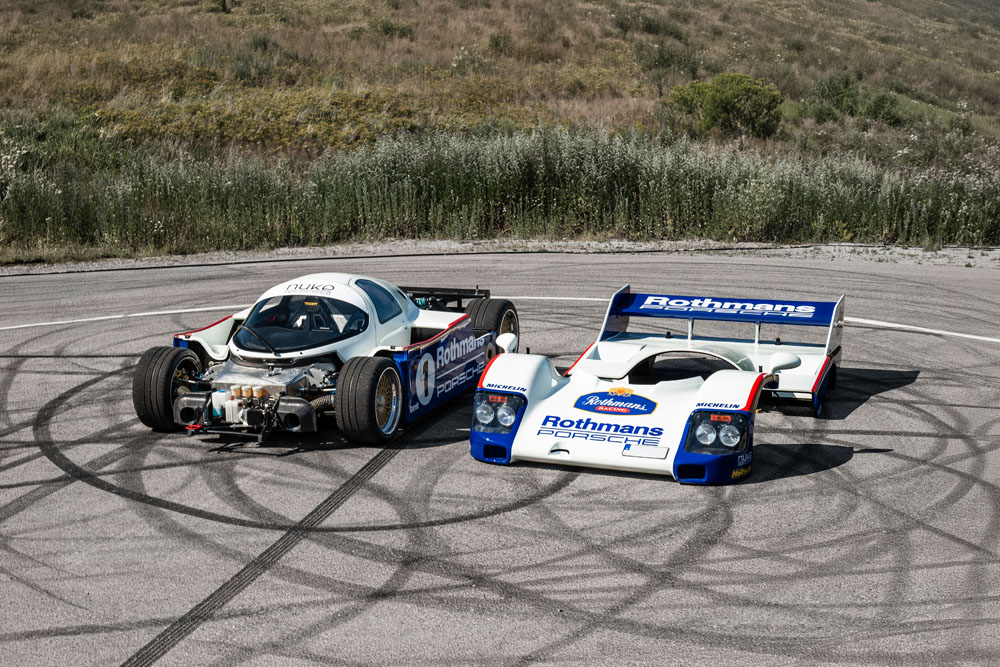
The Rothmans colours and low-slung silhouette immediately catch the eye. Beneath the bodywork lies the reason this road-legal 962 Tribute deserves a closer look: a thoroughly engineered, one-off car with its own chassis, a Porsche-based turbocharged engine, a sequential gearbox and carefully considered solutions for road use. Alongside the Porsche 962 Kremer, both its inspiration and its distinct identity become clear.
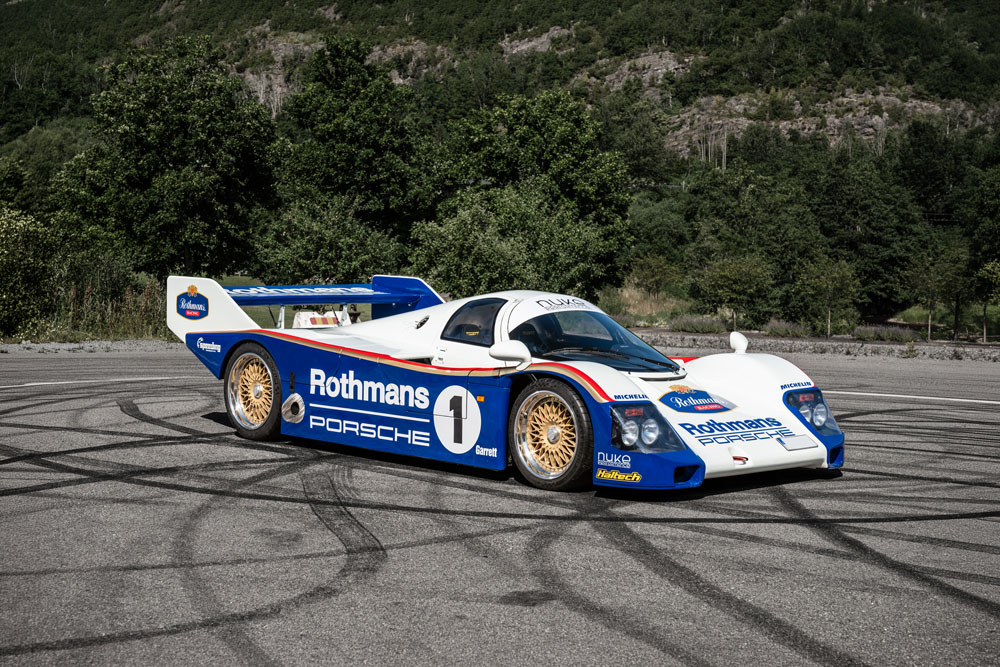
The Porsche 962 C won Le Mans in both 1986 and 1987 and remains one of the best-known cars of the Group C era. Its story also includes the development work carried out by private teams, among which Kremer Racing played an important role.
With its CK6, Kremer developed its own chassis and aerodynamic solutions around Porsche racing technology. Kremer worked with chassis builder John Thompson and TC Prototypes to create a stiffer structure using aluminium honeycomb. It illustrates just how much engineering development lies behind the familiar 962 silhouette.
The Kremer car is our connection to that racing world. At the same time, the comparison offers a reason to look closely beneath the Tribute’s bodywork, where the project’s own engineering decisions come into focus.
A purpose-built chassis at its core
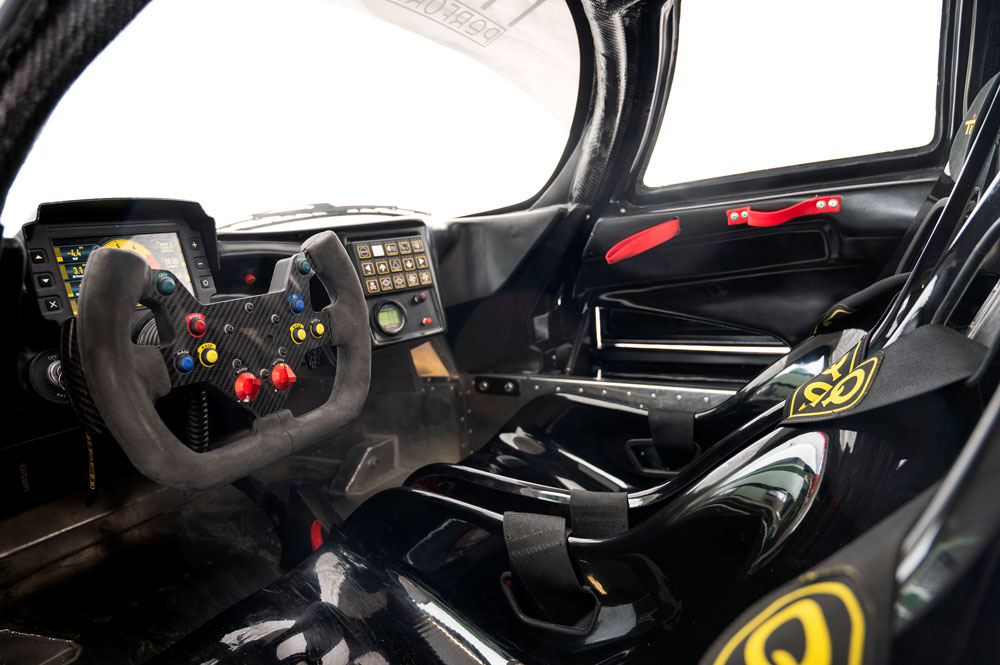
The project began with drawings from Dragon Prototypes. Beneath the bodywork is a tubular steel chassis clad in riveted aluminium panels, together with an integrated roll cage. The body is made from fibreglass, while the doors, floor and diffuser, among other parts, are specified as carbon fibre.
This construction differs from the monocoque chassis of the historic 962 race cars. The Tribute has its own technical foundation, tailored to its drivetrain and intended use.
This demands extensive work on mounting points, packaging and the interaction between the car’s various systems. The engine, gearbox, suspension, cooling and bodywork all have to fit and function together within the same structure. That is where the scale of the undertaking becomes apparent.
Porsche engine and drivetrain
Behind the cockpit sits a flat-six based on the Porsche 996 Turbo engine, from the engine family commonly known as Mezger. The installation features twin Garrett G30-660 turbochargers, custom-built intercoolers and a dry-sump lubrication system.
This engine differs in design and origin from the historic 962 racing engine. The connection lies in Porsche’s tradition of turbocharged flat-six engines, while a later-generation unit was chosen as the basis for the Tribute.
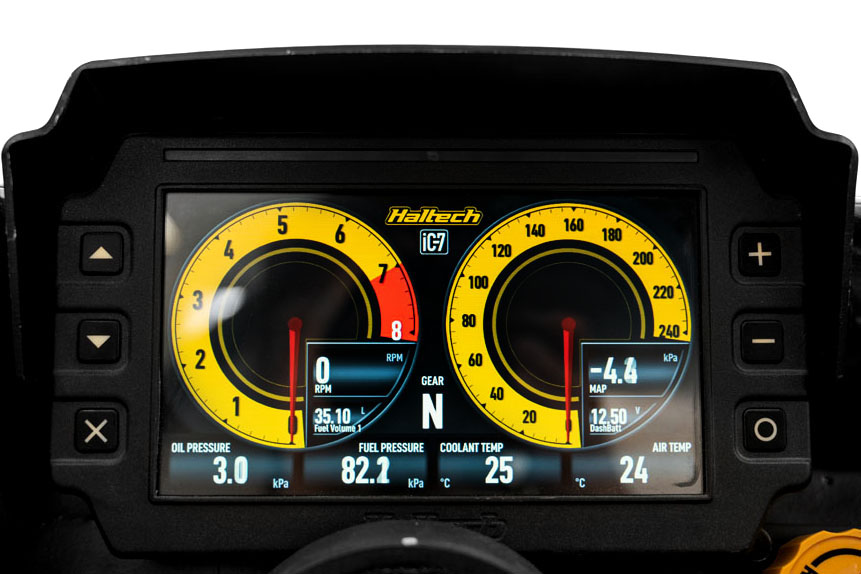
Engine management is handled by a Haltech Nexus R5, with a Haltech IC7 display in front of the driver. The drivetrain also includes an Elite TXL300-6S six-speed sequential transaxle, a Tilton triple-plate clutch and pneumatic paddle shifting from MME.
The specification reveals the project’s ambition. Components selected for a serious high-performance build have been brought together in a complete drivetrain.
Suspension and brakes
The engineering continues at the wheels. The build specification includes Nitron NTR R3 suspension, AP Racing brakes with six-piston front calipers, Forgeline centre-lock wheels and Michelin Pilot Sport Cup 2 tyres.
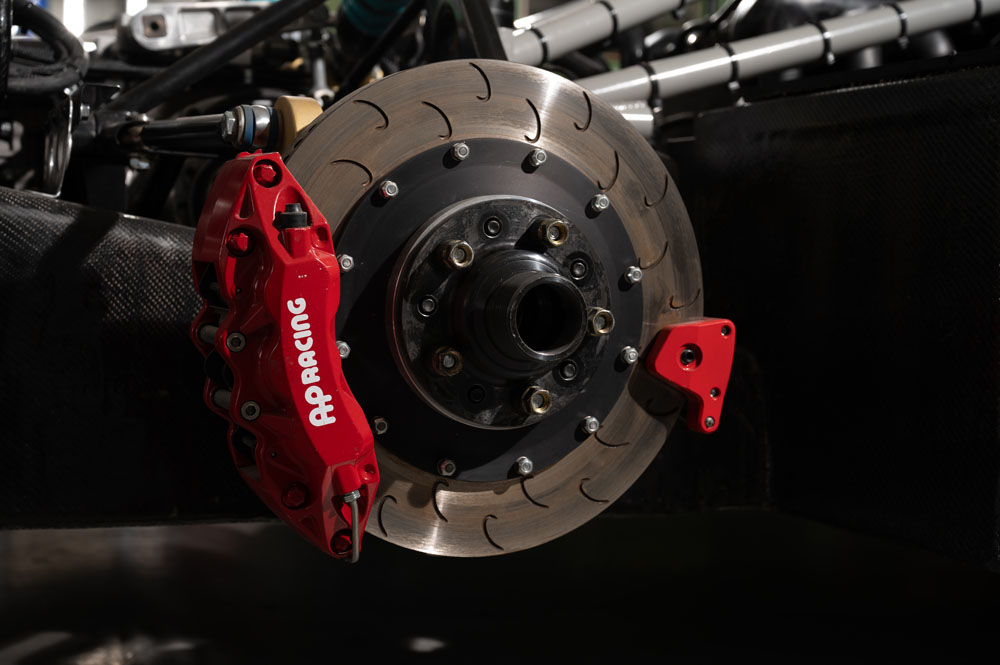
These components are tangible examples of how seriously the project has been approached. The suspension, brakes and power transmission have received the same attention as the engine installation and bodywork.
At the same time, the car has features designed for real-world road use. According to the specification, a front lift system provides an additional 40 mm of ground clearance. In a car this low, that matters when negotiating a driveway or a change in road level. There is also a passenger seat, so someone else can share the experience.
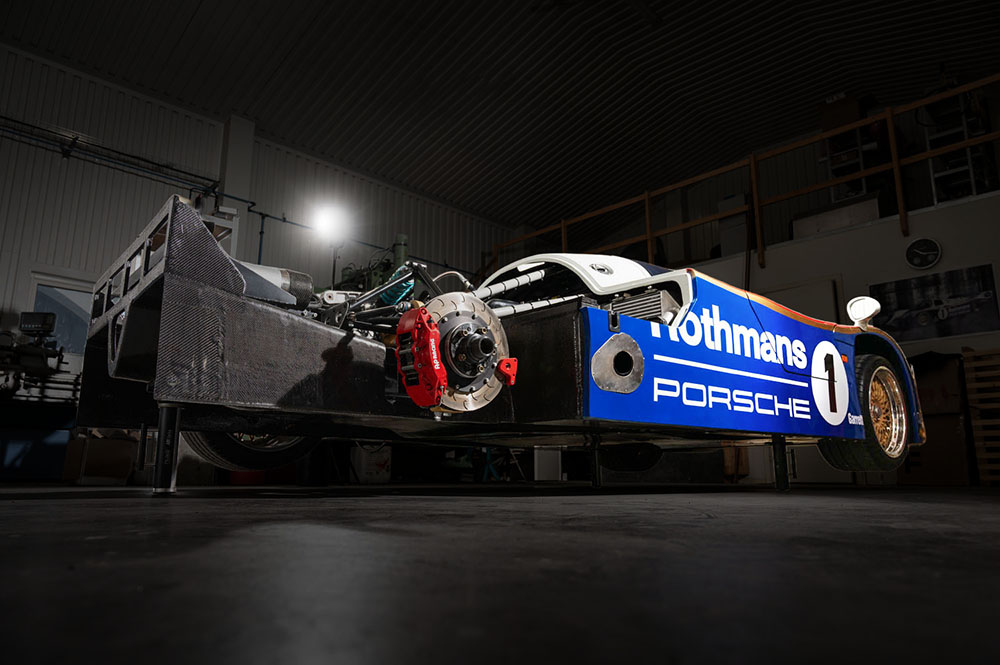
Kremer and Tribute side by side
| Aspect | Porsche 962 Kremer | Road-legal 962 Tribute |
|---|---|---|
| Background | Historic race car from the 962 family | Independently engineered one-off inspired by the 962 |
| Technical concept | Group C-era racing technology | Purpose-built tubular steel chassis with later-generation components |
| Engine | 962-family racing engine | Porsche 996 Turbo-based Mezger engine |
| Intended use | Originally built for circuit racing | Road-registered for public roads and track use |
The Kremer car’s historical identity gives it a special place. The Tribute’s appeal lies in its engineering, craftsmanship and the opportunity to enjoy it in a completely different setting.
That is also where the comparison becomes most compelling. When the Rothmans-liveried car leaves its parking spot and joins everyday traffic, the extent of the project becomes tangible. The extraordinary silhouette remains, but now it is surrounded by road signs, junctions and ordinary passenger cars.
Behind that sight are all the engineering decisions that made the drive possible. To understand this 962 Tribute, the story needs to be followed all the way from the chassis to the open road.
Film and photography: Runbox Sweden.
PORSCHE 962 TRIBUTE
Auction date to be announced
On Car & Classic
https://www.carandclassic.com/auctions/2025-porsche-962-road-legal-tribute-4w0V78